
Solar and Battery Adelaide: Designed Around Your Home, Not Your Roof
Solar and Battery Adelaide: Designed Around Your Home, Not Your Roof
Choosing a solar and battery system in Adelaide is about more than fitting panels on your roof or selecting the largest battery available.
Two homes with similar roof sizes can have very different electricity needs. One household might use most of its electricity during the day, while another relies heavily on air conditioning and appliances in the evening.
That's why the right solar and battery system should be designed around how your household actually uses energy.
At Energy Loop, we believe solar panels, battery storage and future home energy needs should be considered together.
One Home. One Energy Plan.
Why Solar and Battery in Adelaide Needs a Whole-Home Plan

Solar panels generate electricity during daylight hours, but your household continues using energy after the sun goes down.
Without battery storage, excess solar electricity may be exported to the grid. A home battery can store some of that electricity for use later, potentially reducing the amount of power you need to purchase from your electricity retailer.
For Adelaide homeowners, the financial benefits depend on factors such as electricity consumption, solar generation, feed-in tariffs and electricity prices.
A whole-home approach considers these factors before recommending a system.
Rather than focusing only on the number of panels or battery capacity, the goal is to create a solar and battery solution that suits your home today and can accommodate future needs.
Explore Energy Loop's solar panels Adelaide solutions.
Start With Your Home's Energy Profile, Not a Package Deal
Every home uses electricity differently.
Understanding your household's energy profile is an important first step when comparing solar and battery Adelaide options.
How Much Electricity Do You Use After Dark?
Solar panels generally produce electricity during daylight hours, while many households use substantial amounts of electricity in the evening.
Cooking, lighting, air conditioning and other appliances can all contribute to electricity demand after solar generation declines.
A battery can help supply some of this demand using electricity stored earlier in the day.
However, the right battery size depends on your actual usage patterns, not simply your total daily electricity consumption.
Reviewing your electricity bills and available usage data can help identify an appropriate storage capacity.
Roof Space, Orientation and Shading
Your roof also influences solar system performance.
Factors such as orientation, available space, shading and panel placement affect how much electricity your system can generate throughout the day.
For example, north-facing and east-west solar panel layouts may produce different generation patterns.
A suitable design considers both the roof and the times when your household needs electricity.
Planning for Future Energy Needs
Your household's energy requirements may change.
You might be planning to add:
- An electric vehicle charger
- Ducted air conditioning
- Heat pump hot water
- Electric cooking appliances
- Additional household equipment
These additions can influence your future electricity consumption and the solar, inverter and battery capacity you may require.
If you're considering ducted air conditioning alongside solar, planning the systems together can help you make informed decisions.
Solar Panels Adelaide: What Actually Matters?
When comparing solar panels in Adelaide, the largest system or highest advertised panel wattage is not automatically the best choice.
Several factors should be considered.
Panel Quality, Warranty and Performance
Solar panel performance depends on sunlight, temperature, shading and installation conditions.
Adelaide's hot summers make temperature performance worth considering when comparing different panels.
Homeowners should also review product warranties, performance warranties and manufacturer specifications.
Choosing suitable equipment is about long-term reliability as well as initial capacity.
Choosing the Right Solar Inverter
An inverter converts electricity generated by solar panels into electricity that can be used in your home.
A standard solar inverter and a hybrid inverter offer different capabilities.
A compatible hybrid inverter can support battery integration, while other battery configurations may allow storage to be added to an existing solar system.
If you're considering battery storage in the future, it is worth discussing inverter compatibility before installing your solar panels.
Learn more about solar installation in Adelaide with Energy Loop.
Solar Battery Adelaide: Sizing, Chemistry and Backup
Battery storage is an important part of whole-home energy planning.
However, choosing the right battery involves more than comparing the number of kilowatt-hours advertised.
Battery Capacity and Power Output
Battery capacity is measured in kilowatt-hours (kWh). It indicates how much energy a battery can store.
Power output is measured in kilowatts (kW). It indicates how much power a battery can deliver at a particular time.
Both matter.
For example, a household that wants to run ducted air conditioning and other appliances using battery power needs to consider the system's available output, not just its storage capacity.
The appropriate battery depends on your household's electricity usage, existing solar system and intended applications.
Lithium Iron Phosphate (LFP) Batteries
Lithium iron phosphate, or LFP, is a battery chemistry commonly used in residential energy storage systems.
LFP technology is known for its thermal stability and cycle-life characteristics.
However, performance, warranty coverage and expected lifespan vary by manufacturer and model.
It is important to compare the specifications of the actual products being considered.
Whole-Home Backup vs Essential-Load Backup
Some solar battery systems can provide backup electricity during a power outage when installed with compatible equipment.
Two common configurations are:
Essential-load backup: Supplies selected circuits, such as lighting, refrigeration or internet equipment.
Whole-home backup: Can support a wider range of household circuits, subject to system capacity, power output and installation configuration.
Not every battery installation includes backup functionality.
If blackout protection is important to you, it should be discussed during the system design stage.
Solar and Battery Brands We Install in Adelaide
Different battery systems offer different features and installation options.
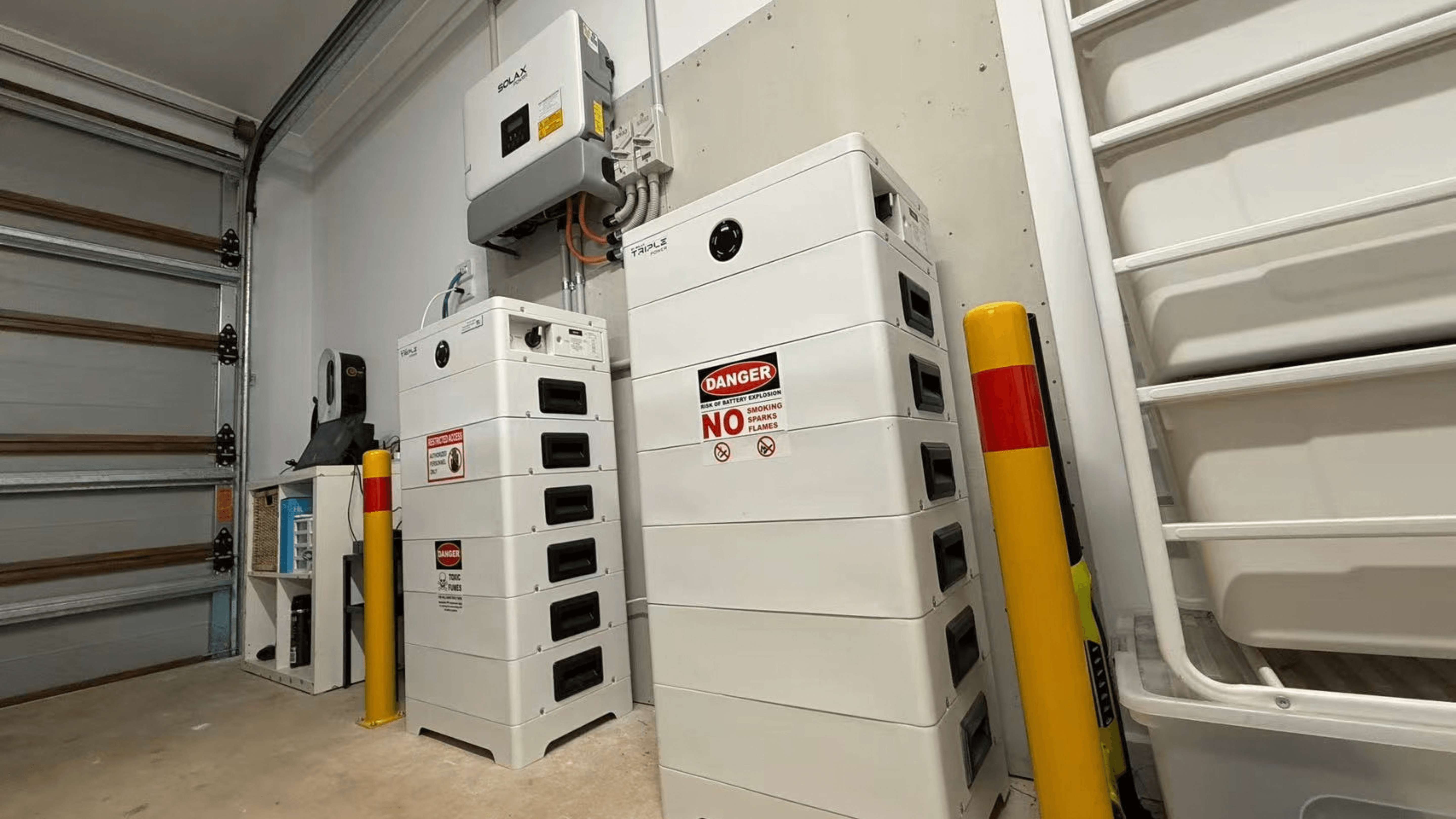
Energy Loop works with brands including Sigenergy and SolaX, allowing homeowners to explore solutions suited to their requirements.
Sigenergy: Integrated Home Energy Storage
Sigenergy's SigenStor platform combines several home energy functions within an integrated system.
Depending on the selected products and configuration, the system can support solar energy conversion, battery storage, energy management and optional EV charging capabilities.
Its modular battery design also provides options for different storage requirements.
Sigenergy may appeal to homeowners planning a new solar and battery installation or considering future home electrification.
SolaX: Flexible Solar Battery Storage
SolaX offers a range of residential battery storage and inverter solutions.
Depending on the products selected, SolaX systems can support new solar installations or compatible battery retrofit configurations.
Modular storage options may also provide flexibility for households whose electricity needs change over time.
For homeowners with an existing solar system, equipment compatibility should be assessed before choosing a battery.
Sigenergy vs SolaX: Which Is Right for Your Home?
Both brands offer residential energy storage solutions, but the most suitable option depends on your property and existing equipment.
Sigenergy provides an integrated energy platform with modular battery configurations and optional EV charging capabilities on selected systems.
SolaX offers a range of modular battery and inverter solutions, including compatible retrofit options for existing solar installations.
Neither brand is automatically the better choice for every household.
The right decision should be based on system compatibility, storage requirements, future electricity demand and budget.
Explore Energy Loop's solar and battery systems in Adelaide.
Battery Installation Adelaide: What to Expect
A residential battery installation generally involves several stages.
1. Home and System Assessment
The existing solar system, electrical infrastructure, battery location and household energy requirements are reviewed.
2. System Design
Suitable equipment and storage capacity are selected based on the property's requirements.
Backup functionality and future energy needs can also be considered.
3. Installation
Qualified installers complete the required electrical work and equipment installation in accordance with applicable requirements.
The time and scope of work depend on the property and system configuration.
4. Testing and Handover
The system is commissioned and checked before handover.
Where supported, homeowners can use a monitoring platform to review solar generation, battery charging and household electricity consumption.
For homeowners comparing battery installation Adelaide services, understanding the proposed system and installation scope is just as important as comparing prices.
Solar Battery Rebates and Virtual Power Plants in Adelaide
Government incentives and electricity market programs can influence the cost and operation of a home battery.
Cheaper Home Batteries Program
The Australian Government's Cheaper Home Batteries Program provides an upfront discount for eligible battery installations.
From 1 May 2026, the incentive calculation uses different rates for different bands of usable battery capacity.
The actual discount depends on the applicable program rules, installation date and eligibility requirements.
For current information, visit the Clean Energy Regulator.
Homeowners should consider their electricity needs first, rather than choosing a battery solely because of an available incentive.
Virtual Power Plants (VPPs)
A Virtual Power Plant, or VPP, connects participating energy resources, including compatible home batteries, to help support electricity network operations.
Depending on the program, households may receive credits or other financial benefits.
However, compatibility and participation requirements vary between providers.
If joining a VPP is part of your plan, it is worth checking compatibility when choosing your battery system.
Why Choose Energy Loop for Solar and Battery in Adelaide?
At Energy Loop, we believe the right energy solution begins with understanding your home.
Solar panels, battery storage, air conditioning and future electrical appliances are connected parts of your household's energy needs.
Considering them together can help you make more informed decisions about system design.
Whether you're installing solar for the first time, adding a home battery or planning future upgrades, our team can help you explore the available options.
One Home. One Energy Plan.
Find out more about our Adelaide solar and battery solutions.