
Ducted Air Conditioning Adelaide: Daikin vs Mitsubishi Electric
Ducted Air Conditioning Adelaide: Daikin vs Mitsubishi Electric
Choosing ducted air conditioning in Adelaide involves more than choosing a brand. The right system also depends on your home's layout, insulation, ceiling space and how you use each room.
Daikin and Mitsubishi Electric are two options worth considering when planning ducted heating and cooling. Both offer residential systems, but their available models and features differ.
Before comparing the brands, it is important to understand how ducted air conditioning works, what affects installation, and which features matter most for your home.
At Energy Loop, we take a whole-home approach to air conditioning. Our goal is to help Adelaide homeowners find a system that suits their space, comfort requirements and energy needs.
What Is Ducted Air Conditioning?
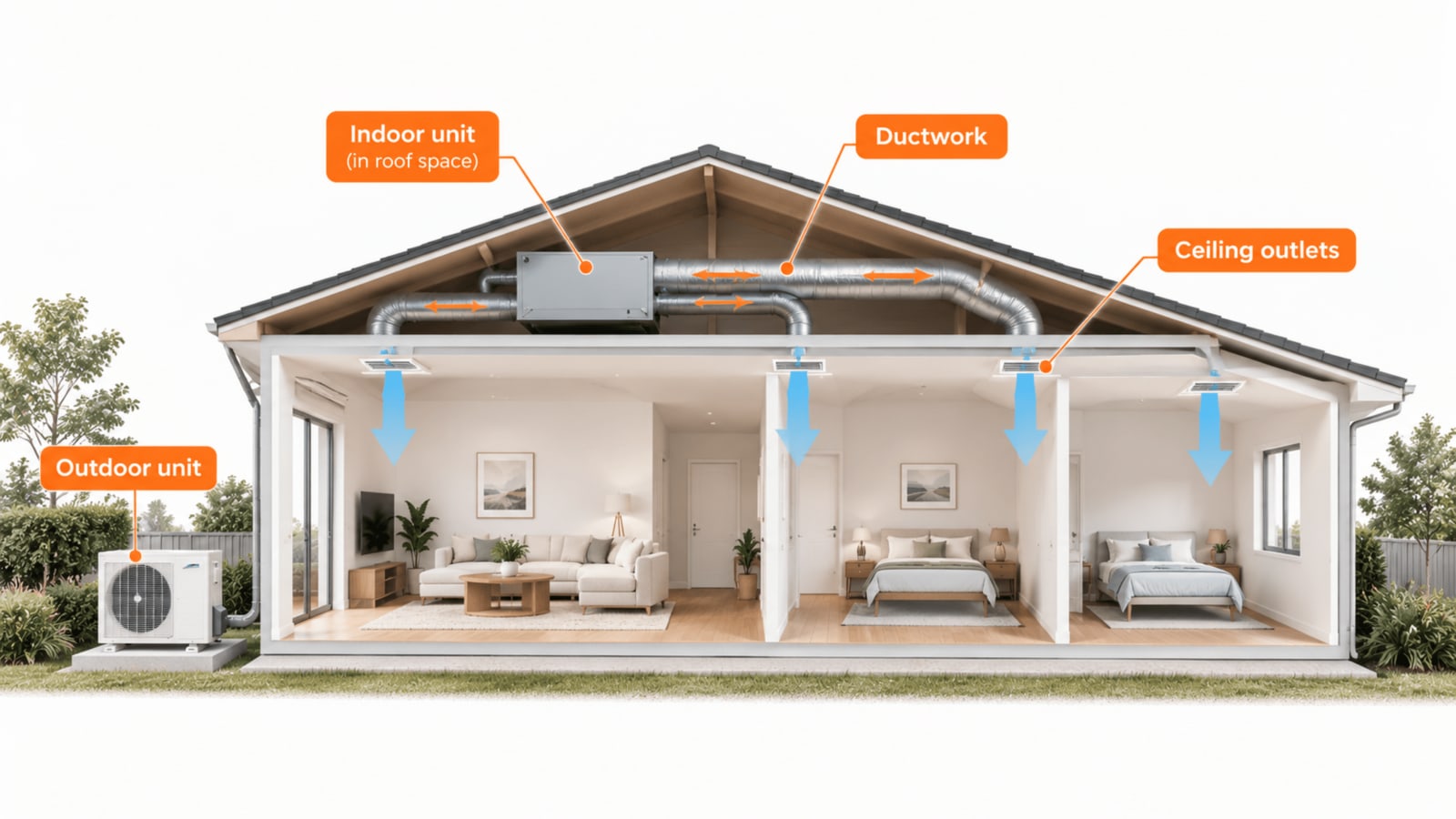
Ducted air conditioning is a reverse-cycle heating and cooling system that distributes conditioned air through ducts connected to outlets throughout your home.
The indoor unit is generally installed in the roof space, while the outdoor unit sits outside. Depending on the system design, a central controller and zoning controls allow you to manage the temperature in different areas.
Ducted air conditioning can be suitable for homes with several bedrooms, open-plan living areas or households that want heating and cooling throughout the home without installing separate wall units in every room.
However, it is not always the most practical choice. If you only need to cool one bedroom or a small living area, a split system may be more appropriate.
The best option depends on your home and how you intend to use the system.
Ducted Air Conditioning Installation Adelaide: Why Design Matters
Before selecting a brand or model, consider how the system will work within your home.
1. Heating and cooling capacity
The right capacity depends on more than floor area. Important factors include:
- The size and layout of your home
- Ceiling height and insulation
- Window size, orientation and glazing
- Roof construction and exposure to sunlight
- The number of rooms you want to condition at the same time
A system that is too small may struggle to maintain your preferred temperature during extreme weather. A system that is larger than necessary may increase the upfront cost without providing a meaningful benefit.
A professional assessment can help determine the capacity required for your home.
2. Zoning and room usage
Zoning allows you to control airflow to different areas of the house.
For example, you might use the living area during the day and the bedrooms at night. With a suitable zoning arrangement, you can avoid conditioning every area when it is not needed.
The number and layout of zones should reflect your household's routine. The system also needs to be designed so that airflow remains suitable when individual zones are turned off.
3. Ductwork and outlet placement
Ductwork affects how evenly air reaches each room.
Poorly designed ducts or incorrectly positioned outlets can contribute to uneven temperatures, restricted airflow and unnecessary noise.
A suitable design considers duct sizing, insulation, return-air pathways and outlet positions before installation begins.
4. Existing homes versus new builds
New homes provide more opportunities to plan the indoor unit, duct routes and outlets during construction.
Existing homes require additional consideration of roof access, ceiling clearance, electrical capacity and the available space for ductwork.
For older Adelaide homes with limited roof space, the dimensions of the indoor unit can be an important factor when comparing models.
Daikin Ducted Air Conditioning Adelaide
Daikin offers residential ducted reverse-cycle systems designed to provide heating and cooling throughout the home.
When comparing Daikin models, consider the following features.
Features to consider
Heating and cooling performance
Check the model's rated capacity and operating specifications to determine whether it suits your home's requirements.
High-temperature operation
Adelaide summers can place considerable demands on air conditioning equipment. Review the manufacturer's operating-temperature specifications and performance information when choosing a system for local conditions.
Air purification
Some Daikin systems offer Streamer technology. Check the features available for the specific model you are considering rather than assuming every ducted system includes the same technology.
Noise control
Outdoor unit noise may matter if the unit is installed near a bedroom, living area or neighbouring property. Compare the published sound levels and available quiet-operation features.
Controls and zoning
Check the controller options, zoning compatibility and any additional equipment required for your preferred setup.
Who should consider Daikin?
Daikin may be worth considering if you are comparing its available capacity options, air purification features, controls and operating specifications.
The most suitable model will depend on your home and the features you value most.
Mitsubishi Electric Ducted Air Conditioning Adelaide
Mitsubishi Electric also offers residential ducted air conditioning systems for whole-home heating and cooling.
When comparing its models, ceiling clearance, operating noise and airflow requirements may be particularly important.
Features to consider
Low-profile indoor units
Some Mitsubishi Electric ducted models are designed with a low-profile indoor unit. This may be useful when the available roof or ceiling space is limited.
Always check the dimensions of the specific model and confirm that the proposed installation can accommodate the unit and ductwork.
Noise levels
Compare the published indoor and outdoor sound levels. The actual experience will depend on the selected model, installation location and operating conditions.
Airflow settings
Review the available fan settings and external static pressure specifications to determine whether the unit can support the duct layout required for your home.
Air purification
Selected Mitsubishi Electric models offer Plasma Quad air purification features. Availability depends on the model and configuration.
Controls and zoning
Check the available controllers and zoning options, including any additional equipment needed to achieve the desired room-by-room control.
Who should consider Mitsubishi Electric?
Mitsubishi Electric may be worth considering when roof-space limitations, indoor unit dimensions, noise levels or airflow requirements influence the installation.
As with Daikin, the final decision should be based on the specifications of the particular model rather than the brand name alone.
Daikin vs Mitsubishi Electric: Which Is Better?
Neither brand is automatically the best choice for every Adelaide home. Compare the features that matter to your installation.
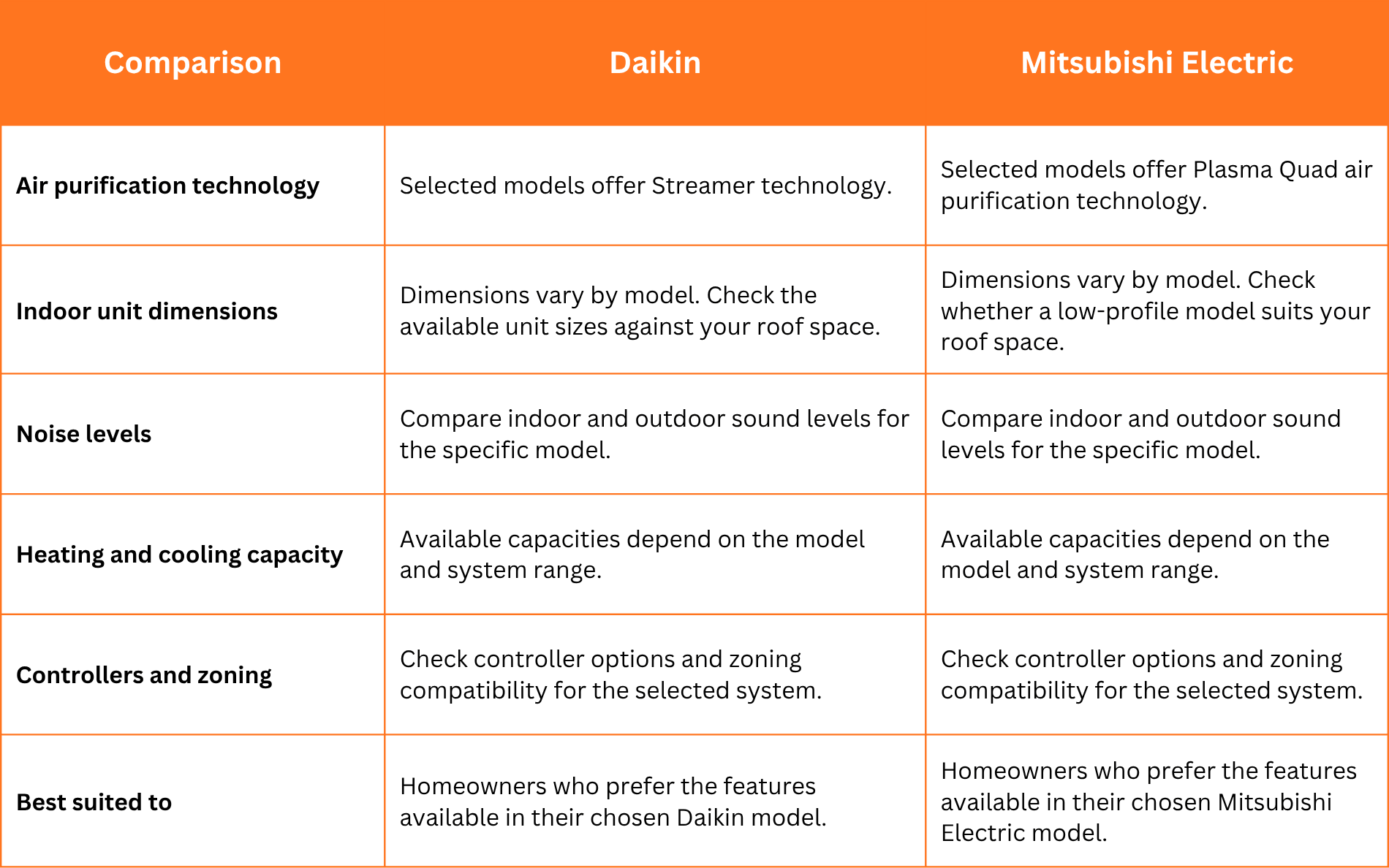
When comparing quotes, make sure you are comparing similar system capacities, zoning arrangements, installation inclusions and warranty terms.
A lower upfront price does not necessarily mean better value if the system design does not suit your home.
How Much Does Ducted Air Conditioning Cost in Adelaide?
The cost of ducted air conditioning installation in Adelaide varies according to the home and the system selected.
Factors that affect the price include:
- System capacity and model
- Number of zones and control requirements
- Roof access and ceiling clearance
- Ductwork and outlet requirements
- Electrical work or switchboard upgrades
- Installation complexity and the layout of the property
For an existing home, the roof space and access conditions can significantly affect the installation requirements. New builds may offer more flexibility because the system can be planned during construction.
Rather than choosing a system based on a generic price estimate, request an assessment that identifies the equipment, zoning and installation work required.
Can Ducted Air Conditioning Work With Solar and a Home Battery?
Yes. Ducted air conditioning can be part of a home energy plan that also includes solar panels and battery storage.
However, installing solar panels or a battery does not automatically mean your air conditioner will operate entirely on solar energy.
The result depends on several factors, including:
- How much electricity your solar system generates
- When your household uses air conditioning
- The air conditioner's electricity demand
- The battery's usable storage capacity
- The battery inverter's continuous power output
- The system's ability to handle the air conditioner's starting demand
Battery capacity and power output are different measurements. Capacity describes how much energy the battery can store, while power output describes how much electricity it can supply at a given time.
If you want ducted air conditioning to operate during a blackout, the system design must also support backup operation. The inverter's output, starting demand, electrical configuration and backup circuits all need to be considered.
At Energy Loop, our whole-home approach considers how air conditioning fits with your other energy requirements.
Why Choose Energy Loop for Ducted Air Conditioning in Adelaide?
Choosing a ducted air conditioning system should begin with your home, not just a product catalogue.
Energy Loop provides air conditioning solutions for Adelaide homeowners, with a focus on selecting equipment and planning installations around individual requirements.
Our approach considers:
- Home assessment: Understanding the property's layout and installation constraints.
- System selection: Comparing suitable equipment based on capacity, features and specifications.
- Zoning and airflow: Planning how conditioned air will reach the areas you use.
- **Whole-home energy planning: **Considering how air conditioning may interact with solar, battery storage and other electrical loads.
- Installation planning: Identifying the work required for the property before proceeding.
We can help you compare Daikin and Mitsubishi Electric options and understand which features are relevant to your home.
Our team is based at 104 Muller Road, Greenacres, South Australia, and services Adelaide and surrounding areas.