
Home Battery and EV Charging: Why Your Home Needs More Than Just an EV Charger
Home Battery and EV Charging: Why Your Home Needs More Than Just an EV Charger
As electric vehicles (EVs) become increasingly popular in Australia, more homeowners are looking for convenient and cost-effective ways to charge their cars at home. While installing a dedicated EV charger is a great first step, combining it with a home battery system can offer even greater benefits.
A home battery does more than store excess solar energy for your household. It can also help power your electric vehicle, allowing you to make better use of the solar energy your home generates and reduce your reliance on grid electricity.
Whether you already own an electric vehicle or are planning to make the switch, understanding how solar panels, home batteries and EV chargers work together can help you make a smarter investment in your home's energy future.
1. Home Battery vs EV Charger: What's the Difference?
Although both systems can play an important role in EV ownership, they serve different purposes.
Home Battery: More Than Just Household Energy Storage
A home battery stores excess electricity generated by your solar panels during the day, allowing you to use that energy later when your household needs it.
Instead of sending all your unused solar energy back to the grid, you can store it and use it in the evening to power appliances, lighting, air conditioning and other household essentials.
For EV owners, a home battery offers another advantage: stored electricity can also be used to charge your electric vehicle through a compatible EV charging system.
EV Charger: Designed Specifically for Your Car
A home EV charger is designed to transfer electricity from your home's electrical supply to your electric vehicle.
It provides a convenient way to charge your car at home, particularly overnight or whenever your vehicle is parked.
However, an EV charger does not independently store electricity or supply power to your household. It relies on an available electricity source, such as your solar system, home battery or the electricity grid.
The key difference: An EV charger charges your car, while a home battery stores electricity that can be used for both your household and your electric vehicle.
2. Why Combine Solar Panels, Home Battery and EV Charging?
Combining these three technologies creates a more flexible home energy system.
Use More of Your Own Solar Energy
During the day, your solar panels generate electricity to power your household. Any excess energy can be stored in your home battery rather than being exported to the grid.
You can then use this stored energy later to charge your EV, including in the evening when your solar panels are no longer generating electricity.
Reduce Reliance on Grid Electricity
Without battery storage, homeowners may need to rely on grid electricity to charge their vehicles when solar generation is unavailable.
With a home battery, you can store surplus solar energy during the day and use it later, helping reduce the amount of electricity you need to purchase from the grid.
Power Your Home and Your Vehicle
A home battery provides flexibility beyond EV charging. It can support your everyday household electricity needs, including lighting, refrigeration, appliances and air conditioning.
This means your investment in battery storage can benefit your entire household, not just your electric vehicle.
Greater Energy Independence
By combining solar panels, battery storage and EV charging, you can take greater control of when and how your household uses electricity.
With the right system configuration, you can make better use of renewable energy, manage electricity costs and reduce your dependence on the grid.
3. How Does Home Battery Charging Work with an EV?
Understanding how these systems work together can help you get the most out of your investment.
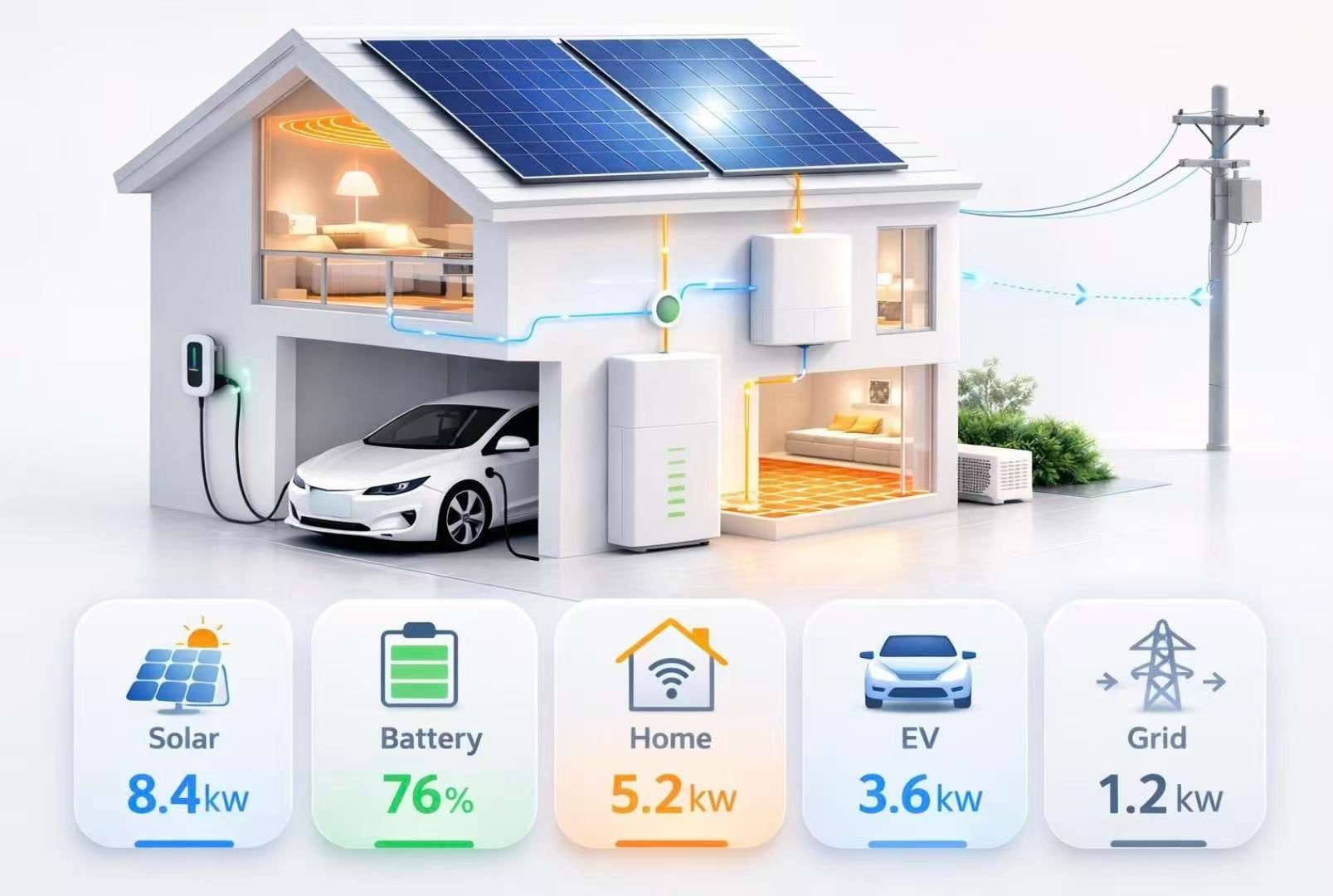
During the Day
Your solar panels generate electricity to power your home first. Any surplus solar energy can be used to charge your EV if it is connected and charging, or stored in your home battery for later use.
During the Evening
When solar generation decreases, your home battery can supply stored electricity to your household. Depending on your battery settings and available capacity, it can also provide energy for EV charging.
Overnight
If your home battery is reserved for household use, you can schedule your EV to charge using cheaper off-peak grid electricity, where your electricity plan offers suitable rates.
Smart energy management settings can help prioritise household consumption, battery storage and EV charging according to your daily energy needs.
4. Which Home Battery Systems Can Work with EV Charging?
Choosing the right battery system is important, particularly if you own an electric vehicle or plan to purchase one.
Some home battery solutions can integrate with dedicated EV charging equipment, while others offer more specialised charging options.
Here are two examples:
Tesla Powerwall 3
Tesla Powerwall 3 is a home battery system designed to store solar energy and supply electricity to your household.
When paired with a compatible EV charger, stored energy can also be used to charge your electric vehicle through your home's electrical system.
This allows homeowners to make better use of their stored solar energy rather than relying entirely on grid electricity for vehicle charging.
Sigenergy SigenStor
Sigenergy SigenStor offers a modular home energy solution that can combine solar generation, battery storage and energy management.
For homeowners interested in EV charging, the system can also be configured with an optional Sigen EV DC Charging Module.
This provides an integrated approach to managing home energy storage and electric vehicle charging, with the option of bidirectional charging for compatible configurations and vehicles.
Both solutions offer different approaches to home energy management. The most suitable option will depend on your household's electricity consumption, solar system, EV charging requirements and future energy plans.
5. Is a Home Battery Worth It If You Own an Electric Vehicle?
If you already own an EV or are planning to purchase one, installing a home battery may offer additional value beyond traditional household energy storage.
Consider a home with solar panels, a battery and an electric vehicle.
During the day, the solar system generates electricity while the household is at work. Instead of exporting all unused solar energy to the grid, excess electricity can be stored in the home battery.
When the homeowner returns in the evening, the stored energy can help power household appliances and, depending on the available capacity and settings, charge the electric vehicle.
This creates more opportunities to use the electricity generated by your own solar panels.
However, the right battery capacity and inverter output are important. An EV can consume a significant amount of electricity, so your system needs to be designed around both household consumption and vehicle charging requirements.
If the battery is too small, charging your EV may leave insufficient stored energy for your household's evening electricity needs.
A professional assessment can help determine the right system size and configuration.
6. What Should You Consider Before Installing a Home Battery and EV Charger?
Before investing in a combined home energy solution, consider the following:
-
Daily Household Electricity Consumption: Understand how much electricity your home uses, particularly during the evening.
-
EV Charging Requirements: Consider your vehicle's battery capacity, daily driving distance and how frequently you need to charge.
-
Solar System Capacity: Your solar system needs to generate sufficient electricity to support household consumption, battery charging and EV charging.
-
Home Battery Capacity: Choose a battery size that suits both your household energy requirements and EV charging needs.
-
Inverter Output: Ensure your system can handle the power requirements of your household and EV charging equipment.
-
Smart Energy Management: Look for compatible systems that allow you to manage charging schedules and prioritise household energy use.
-
Future Energy Needs: If you plan to purchase an EV, install additional batteries or expand your solar system in the future, consider these requirements when planning your installation.
Make Your Home Ready for the Future of Energy
Installing a home battery is about more than storing solar energy for your household. It can also create new opportunities to power your electric vehicle using electricity generated by your own solar panels.
While an EV charger provides the equipment needed to charge your car, combining it with a home battery gives you greater flexibility in how you generate, store and use electricity.
Whether you are already driving an electric vehicle or considering making the switch, planning your solar, battery and EV charging systems together can help you get more value from your home's energy investment.
Ready to Power Your Home and Your EV?
At Energy Loop, we help Adelaide homeowners find the right solar, battery and energy solutions to suit their needs.
Whether you are looking to install a home battery, upgrade your existing solar system or prepare your home for EV charging, our team can help you explore the right options.
Contact Energy Loop today to discuss your home energy requirements and get a solution designed around your lifestyle.