
Can One Split System Heat or Cool Multiple Rooms?
Can One Split System Heat or Cool Multiple Rooms?
A split system air conditioner is a popular choice for Australian homes, offering efficient heating and cooling for individual rooms and open-plan living areas. But can one split system effectively heat or cool multiple rooms throughout your home?
The answer depends on the type of air conditioning system, your home's layout and the number of rooms you want to condition. While a standard split system can comfortably serve a suitable-sized room or open-plan area, heating or cooling several separate rooms usually requires a different solution.
Can One Split System Cover Multiple Rooms?
A standard wall-mounted split system consists of one indoor unit connected to one outdoor unit. It is designed to heat or cool the space where the indoor unit is installed.
If the unit is installed in an open-plan living and dining area, it may be able to condition the entire space, provided it has the appropriate capacity and airflow. However, it is generally less effective at maintaining consistent temperatures in separate rooms, particularly when doors are closed or airflow is restricted.
For example, a split system installed in your living room may provide some heating or cooling to an adjoining hallway, but it is unlikely to maintain the same level of comfort in bedrooms located further away.
If you want to heat or cool multiple bedrooms, living areas or other separate spaces, there are three main options to consider.
Which Air Conditioning System Is Best for Multiple Rooms?
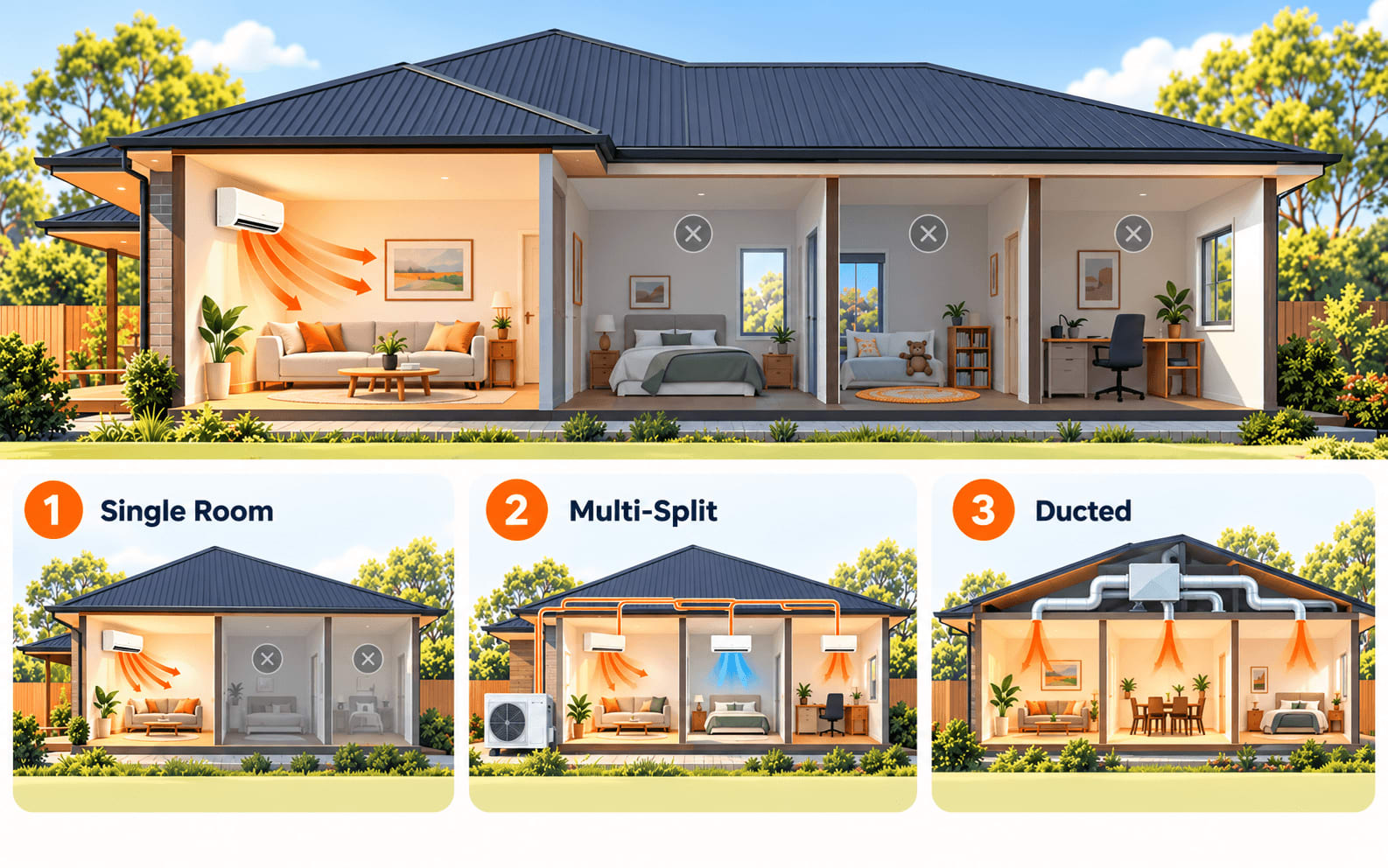
1. Separate Split Systems
Installing an individual split system in each room gives you dedicated heating and cooling for the spaces you use most.
Each system can generally be operated independently, allowing you to adjust the temperature in one room without running the units in other rooms.
Best for: Homes where you want to condition selected rooms individually, such as bedrooms, home offices or living areas.
Things to consider: Each system generally requires its own outdoor unit, so you will need sufficient installation space. The upfront cost will depend on the number of units and the complexity of the installation.
2. Multi-Split Air Conditioning
A multi-split air conditioning system connects multiple indoor units to a single outdoor unit. Each indoor unit is installed in a separate room, allowing you to control the temperature in each connected space independently.
Depending on the model, a multi-split system can accommodate several indoor units, making it a practical option for homes with limited outdoor space.
For example, you could install indoor units in your living room and two bedrooms while using just one outdoor unit.
Best for: Homes that need heating and cooling in multiple separate rooms but have limited space for outdoor units.
Things to consider: The outdoor unit must have sufficient capacity for the connected indoor units. The maximum number and combination of indoor units depend on the selected model. Most conventional multi-split systems also operate in either heating or cooling mode at a time, rather than providing both modes simultaneously in different rooms.
3. Ducted Air Conditioning
Ducted air conditioning is designed to distribute heated or cooled air throughout multiple areas of your home through concealed ductwork, typically installed in the roof space.
Air is delivered through ceiling or other suitable outlets, creating a discreet solution for whole-home comfort.
Many ducted systems offer zoning, which allows you to direct airflow to selected areas, such as bedrooms or living spaces. This means you may not need to condition the entire home when only certain areas are being used.
However, the level of temperature control depends on the system and its zoning controls. Standard zoning does not necessarily provide an independent temperature setting for every room.
Best for: Homes where you want a discreet, integrated heating and cooling solution across multiple rooms or throughout the house.
Things to consider: Installation can be more complex and may cost more upfront than installing a single split system. Roof access, available space, duct design and the number of zones can all affect the installation.
How Do You Choose the Right Air Conditioning System?
The best system depends on more than just the number of rooms in your home. Before making a decision, consider the following factors:
- Home layout: Open-plan spaces may be suitable for one appropriately sized split system, while separate rooms generally need dedicated indoor units or a ducted solution.
- Room size and insulation: Ceiling height, window orientation, insulation and exposure to sunlight all influence heating and cooling requirements.
- Usage patterns: Consider whether you need to condition the entire home or only certain rooms at different times of the day.
- Installation space: Check the available space for outdoor units, roof access for ductwork and suitable locations for indoor units.
- Budget and running costs: Compare the initial installation cost, expected energy consumption and the flexibility to condition only occupied areas.
A professional assessment can help determine the required capacity and identify a system that suits your home's layout and comfort requirements.
Find the Right Multi-Room Air Conditioning Solution with Energy Loop
At Energy Loop, we help South Australian households find air conditioning solutions suited to their homes, lifestyles and budgets.
Whether you are considering separate split systems, a multi-split system or ducted air conditioning, our team can help you compare your options and arrange professional installation.
Looking for a better way to heat and cool your home?
Contact Energy Loop to discuss your air conditioning needs and find a solution designed around your home.